Team
Skin in the game,
or it doesn't count.
RSKX is led by an operator who built CAT analytics inside a wildfire MGA and watched
the aggregate constraint shape every decision the business made.
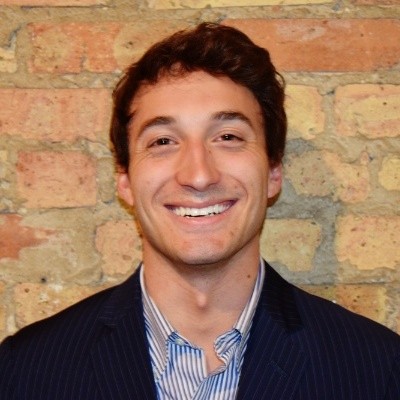 RSKX · 01
FOUNDER
RSKX · 01
FOUNDER
Five years on a fixed income desk at Performance Trust Capital Partners as VP of Data Science for the FIG group — where I learned how real markets price tail risk, and just as importantly, where they fail to.
From there I went on to build the analytics and AI function from scratch at Green Shield Risk Solutions (GSR), a wildfire-focused E&S MGA, where I still hold equity and lead AI & Analytics today.
I'm drawn to problems at the intersection of probability, mathematics, and capital — anywhere the distribution has a fat right tail and the stakes are real.
B.S. Finance
Saint Louis University
MSBA
University of Notre Dame
M.S. Applied Math
DePaul University
Currently
CEO, RSKX · Head of AI & Analytics, GSR
CURRENT & PRIOR
RX
RSKX
CEO & FOUNDER · 2026 →

Green Shield Risk Solutions
HEAD OF AI & ANALYTICS · EQUITY · 2023 →

Performance Trust Capital Partners
VP, DATA SCIENCE · FIG · 2020 — 2023
We're early. We're hiring.
Quant, full-stack, and actuarial roles. If this resonates, get in touch.
Get in touch →